PROGRAMME
ARTISTIC PROGRAMME
A PICTURE OF HEALTH
Theatre of Debate (United Kingdom)
22 October | 9:00pm
Teatro Académico de Gil Vicente
Free entry
Synopsis
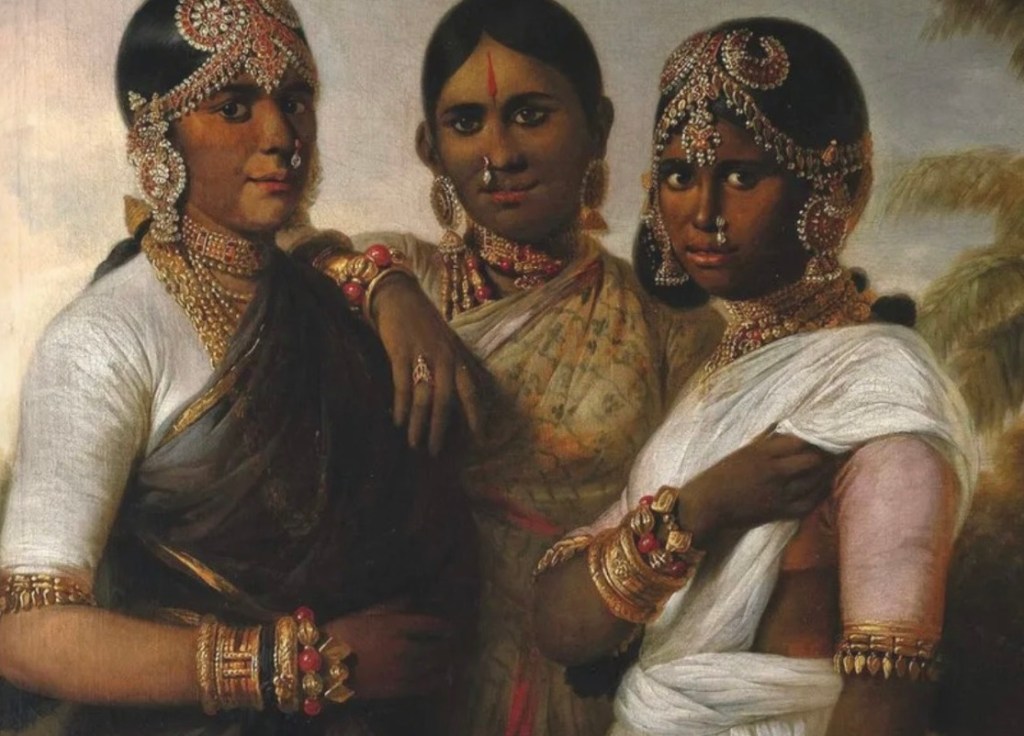
With this production, Theatre of Debate hopes to shed light on the historical significance of vaccines and the importance of vaccination in society. By exploring the story behind Thomas Hickey’s landmark painting of the Three Queens of Mysore and the younger queen Devajammani receiving the smallpox vaccine, the project aims to educate and engage audiences on the importance of vaccines in combating infectious diseases. The debate around vaccines continues to be a hot topic, so it is crucial to understand the historical context and significance of vaccination. By delving into this fascinating story, and bringing it to life on stage, we hope to open minds and spark mature conversations around the subject.
Sudha Bhuchar’s engrossing play not only tells the story of the Three Queens’ role in the history of the smallpox vaccine, but it also explores broader complex socio-historical issues around colonisation, art and society.
As we continue to navigate the challenges of the COVID-19 pandemic, the story of the Three Queens of Mysore serves as a timely reminder of the importance of vaccination in protecting public health. ToD hopes to leave a lasting impact on audiences and encourage thoughtful discussions about issues in the wider historical context as well as vaccination resistance and acceptance. Given added topicality by the recent emergence of M-Pox, the astonishing story of the Three Queens of Mysore serves as a timely reminder of the importance of vaccination in safeguarding public health.
This project would not have been possible without a generous bequest from the estate of actor Peter Stenson who was born in India.
THE VIRTUOSO
Marionet (Portugal)
23 October | 9:00pm
Convento São Francisco
Tickets
Synopsis
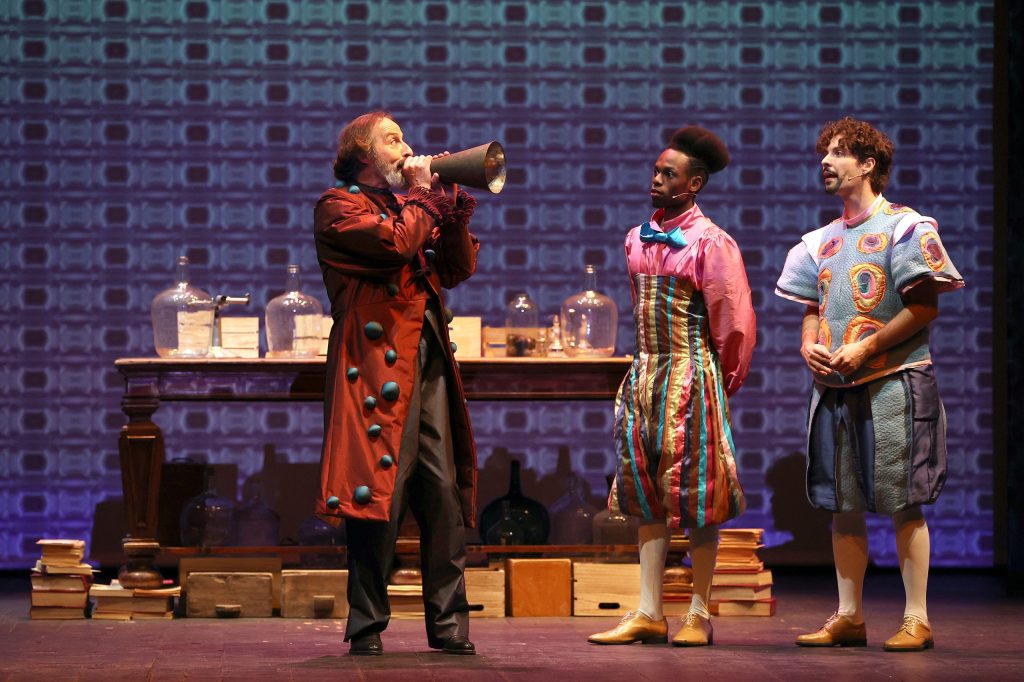
If there is one science that has been studied profusely by the theatre, it is the science of love. This play by Thomas Shadwell is (yet another) treatise on the various forms of emotional relationships between human beings. It depicts marital and extramarital relationships, platonic, romantic and carnal loves. And the other side of these loves too — disenchantment, contempt, rejection, anger, betrayal, and revenge.
Bruce and Longvil are two young men in love with Miranda and Clarinda, but their loves are intertwined — Bruce likes Clarinda who likes Longvil who likes Miranda who likes Bruce. In addition to this mismatch of affections, the girls are under the thumb of an uncle and aunt, Sir Nicholas Gimcrack and Lady Gimcrack, who make it difficult for them to pursue their love interests with the supposed aim of safeguarding the honour of the young maidens. In a classic example of the saying ‘Watch what I say, not what I do’, the uncles each have their own extramarital adventures.
In order to get closer to their nieces, the two young men pretend to be interested in the scientific experiments that Sir Nicholas is carrying out. He, a paradigmatic example of the first explorers of modern science, is closely followed by an inveterate orator — Sir Formal Trifle — who eulogises and applauds his scientific activity, while trying to get close to the young Clarinda.
These characters are joined by the clandestine lovers of the Gimcrack couple, who themselves have a romantic relationship with each other, and old Snarl — Sir Nicholas’ uncle — who is a great defender of the old days and a fierce critic of the degenerate behaviour of the new generations.
It’s an intricate plot that unfolds in The Virtuoso, in which the brand new science of modernity mixes with the age-old science of love.
SYNCHRONICITY
Arthur I. Miller (United Kingdom)
24 October | 5:30pm
Teatro Paulo Quintela
Free entry
Synopsis
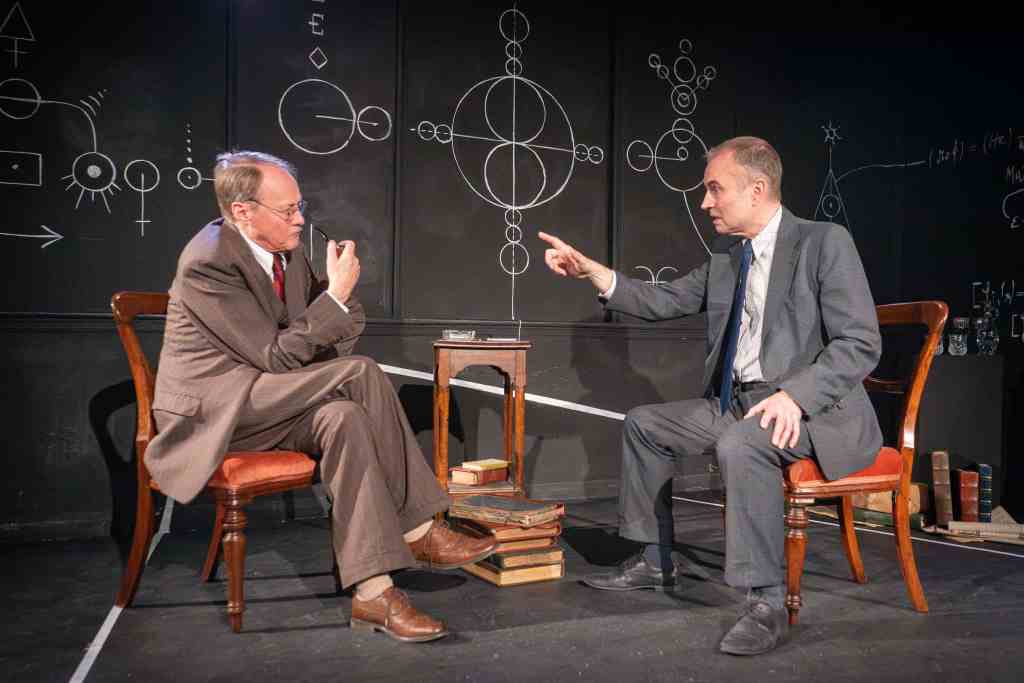
In 1931 the brash and brilliant physicist Wolfgang Pauli approached the world-renowned analyst Carl Jung for help. Pauli’s neurosis had wreaked such havoc with his psyche that when Jung first saw him, he felt as if the “wind had blown over from the lunatic asylum.” In their discussions they stuck sparks off each other and in the end not one but both of them were changed.
Synchronicity is about psychology, physics, alchemy and the extraordinary things that can happen when two brilliant minds meet. Thought provoking, sometimes deep, sometimes moving – it is about how a meeting of the minds can change the world.
THE AXIOM OF CHOICE
Marcus du Sautoy (United Kingdom)
24 October | 9:30pm
Gil Vicente Academic Theatre
Tickets
Synopsis
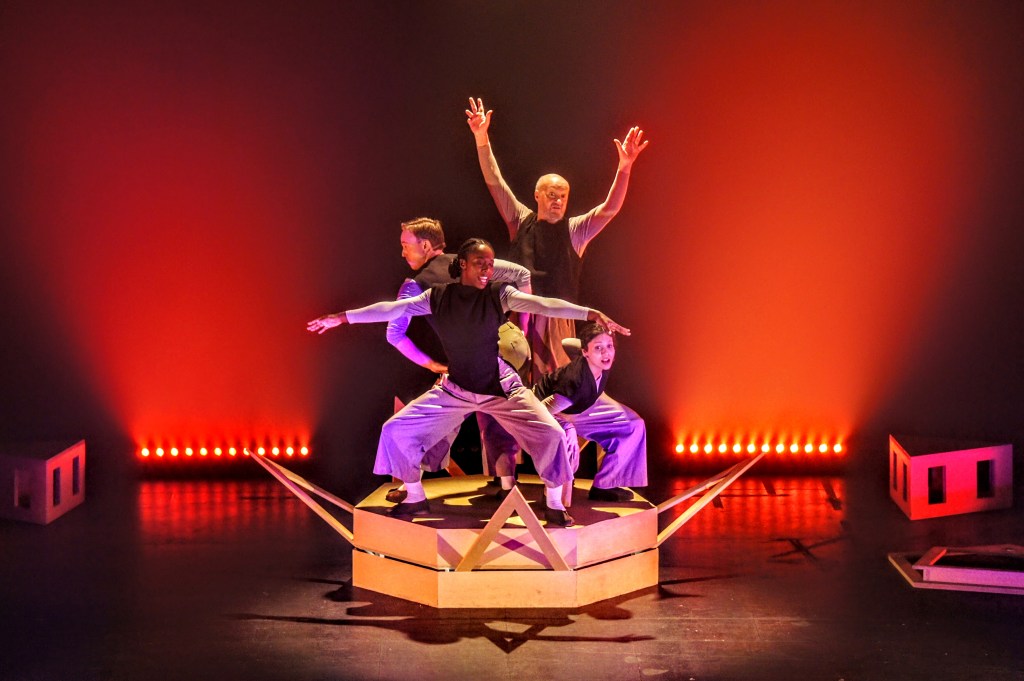
An exploration of free will, war and mathematics. From the Simonyi Professor for the Public Understanding of Science at Oxford University comes a ground-breaking new play The Axiom of Choice. Eminent mathematician Andre Weil is on a journey from France to India, Finland and beyond, to discover whether we really have free will or if all our choices are pre-determined. Imprisoned in Rouen during the Second World War, Weil faces a choice that will determine his fate – but his decision just doesn’t make sense. Is life a mathematical theorem of logical strands? Because sometimes it just doesn’t add up!
CHRISTIANE, un bio-musical científico
Belén Pasqualini (Argentina)
25 October | 5:00pm
Teatro Paulo Quintela
Free entry
Synopsis
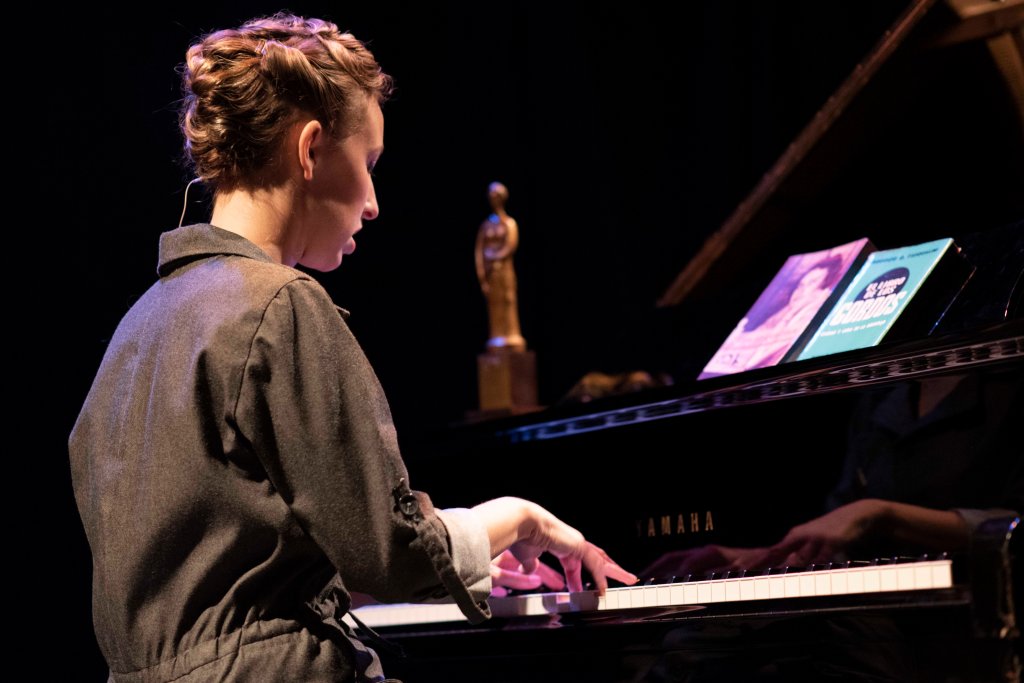
This show reflects the life of Christiane Dosne Pasqualini, an internationally renowned figure in leukaemia research. The play immerses us in the life of its protagonist, who, like an intrepid explorer, arrives in the Pampas in 1942 on a scholarship to collaborate with Bernardo Houssay. Born in France and raised in Canada, Christiane adopted Argentina as her home and became the first woman to join the National Academy of Medicine. Her passion for laboratory rats, and her life which spanned much of the 20(th) century, are full of vigour and humanity that are truly inspiring. ‘Christiane, a scientific bio-musical’ is a great way to get to know this unique woman.
GOETHE’S DARK ROOM
Eunice Gonçalves Duarte (Portugal)
23-25 October | 6:00-8:00pm
Sala B
Free entry
Synopsis
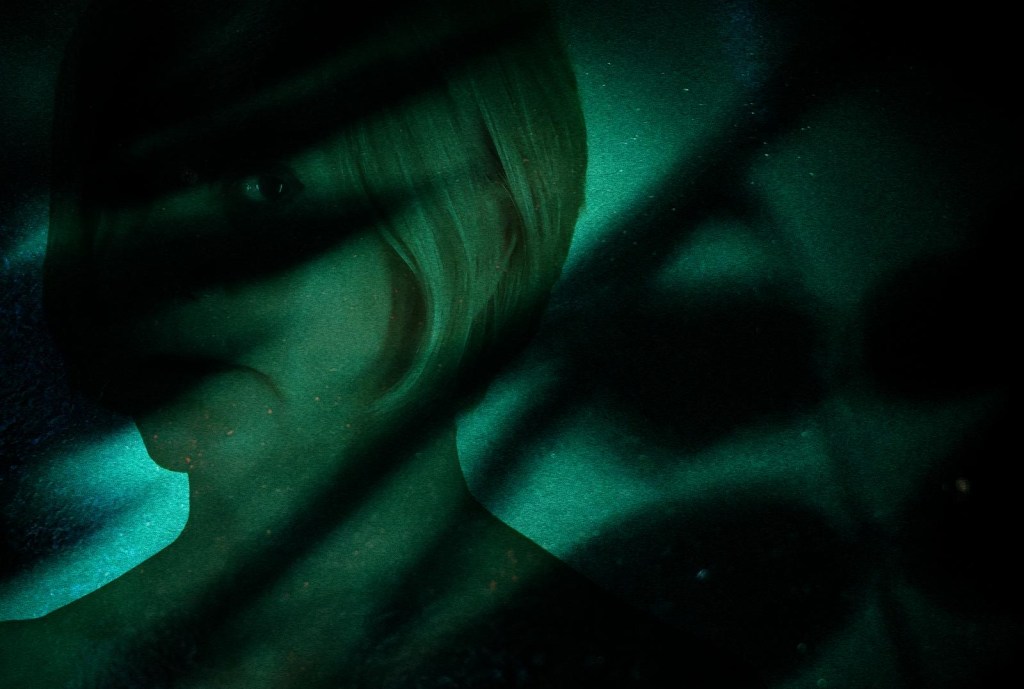
Goethe’s Dark Room is a performance art installation by Eunice Gonçalves Duarte, combining art, science and philosophy to revisit the empirical experiences of Johann Wolfgang von Goethe, as described in Theory of Colours. Drawing on the concepts of light and colour proposed by Goethe and Newton, the piece creates a scenic device in which light and shadow emerge as forces of tension, revealing and concealing forms in metamorphosis.
With performers Beatriz Boleto, Gonçalo Silva and Sofia Lobo, the dramaturgy explores the relationship between the visible and invisible, offering the audience a sensory experience amplified by Nick Rothwell’s sound design.
The project also involves scientists from the fields of physics, neuropsychology and philosophy in order to deepen research on light, the visible spectrum of colour and Goethe’s morphology.
The public will be allowed to enter two people at a time, every 20 minutes.
 Theatre about Science